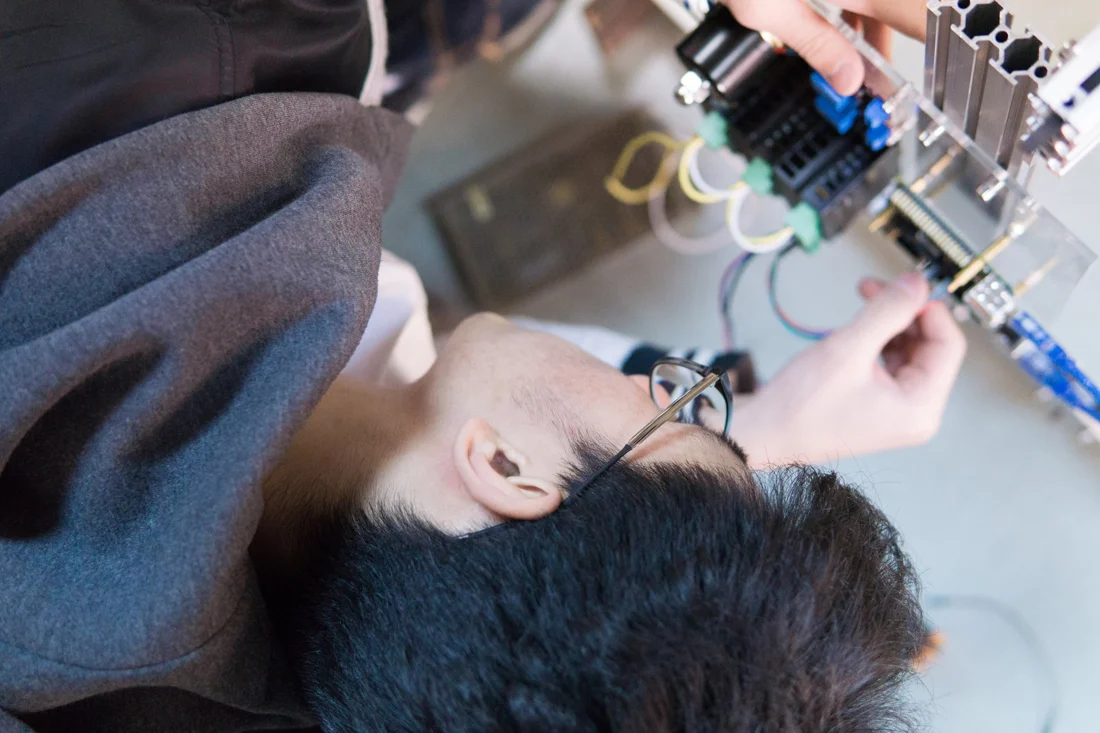
Yize Wang working on a mechatronics project

YIZE WANG / PERSONAL WEBSITE

Robots are reflections
of ourselves.

01

Career Experience

Autonomous driving, robotics, and software engineering.

NVIDIA

Senior Software EngineerRobotics Software

Oct 2026 – Present

Isaac Lab

  • Implemented Isaac Lab tutorial scripts demonstrating physics backends and the use of PyTorch and Warp.
  • Trained Franka and SO101 arms to perform lifting tasks using curriculum-based reinforcement learning with PPO.

Senior Software EngineerAutomotive Department

Sep 2024 – Oct 2026

Road Graph Fusion

  • Implemented a belief-and-heuristics-based framework to construct robust road topology with temporal-spatial fusion.
  • Served as a mono-repo code approver, reviewing component PRs and driving design iterations to improve end-to-end behavior.
  • Owned code quality, overseeing Coverity and coverage checks to ensure compliance with AUTOSAR standards for functional safety.
  • Improved development efficiency by building debugging tools, sharing best practices, and developing automated workflows.
DJI Automotive

Jul 2021 – May 2024

Algorithm EngineerPlanning and Control Department

Highway NOA (HNOA)

Function Owner & Navigation Algorithm Lead

Apr 2023 – May 2024

  • Delivered China’s first mapless HNOA on SGMW YunDuo using a TI TDA4VH automotive SoC (32 TOPS) and a 1R7V sensor configuration. Features included automatic activation and escalation, on/off-ramp navigation, intelligent lane selection, overtaking, speed adaptation, and avoidance of diversion areas and static obstacles. Achieved over 85% success in merging into and exiting main roads, serving 2,300 customers across 610,000 km of autonomous driving as of December 2023.

  • Platformized HNOA across vehicle models from multiple OEMs, supporting different SoC configurations and map providers, including AMap and Tencent Map.
  • Designed HNOA navigation algorithms that achieved over 98% accuracy for navigation-triggered lane changes using only vehicle navigation information, including maneuvers, distance, suggested lanes, and road classes.

City NOA (CNOA)

Navigation Algorithm Lead & Project Agile Coach

Oct 2023 – May 2024

  • Designed and delivered CNOA navigation algorithms, achieving robust urban routing based on multi-hypothesis matching of SD maps and online lane perception. The output was presented as a topological graph indicating lane-level probabilistic connectivity.
  • Led a 12-member CNOA Scrum team as Scrum Master, responsible for planning, tracking, and verifying Stories and Tasks in Sprints.

Memory On Driving (MOD)

Integration Lead & Core Developer

Jul 2021 – Apr 2023

  • Led MOD integration across Perception, Mapping, Localization, Planning, and HMI teams. Demonstrated memory map building, localization, intersection handling, and computational feasibility, securing approvals from multiple OEMs. MOD was released to users in June 2024.
  • Developed navigation algorithms using dynamic programming to calculate drivable areas and a greedy algorithm to minimize lane changes. Improved decisions across multiple lane options, reduced trajectory-following behavior, and prevented deviations from memory maps.
  • Optimized reference lines by fusing memory maps and perceived lane markers with iLQR, handling turns, U-turns, on/off-ramps, diverging and merging lanes, and narrow gaps.

Huawei

Algorithm InternAutomotive Business UnitHD Map GroupShanghai, China

Jun 2020 – Sep 2020

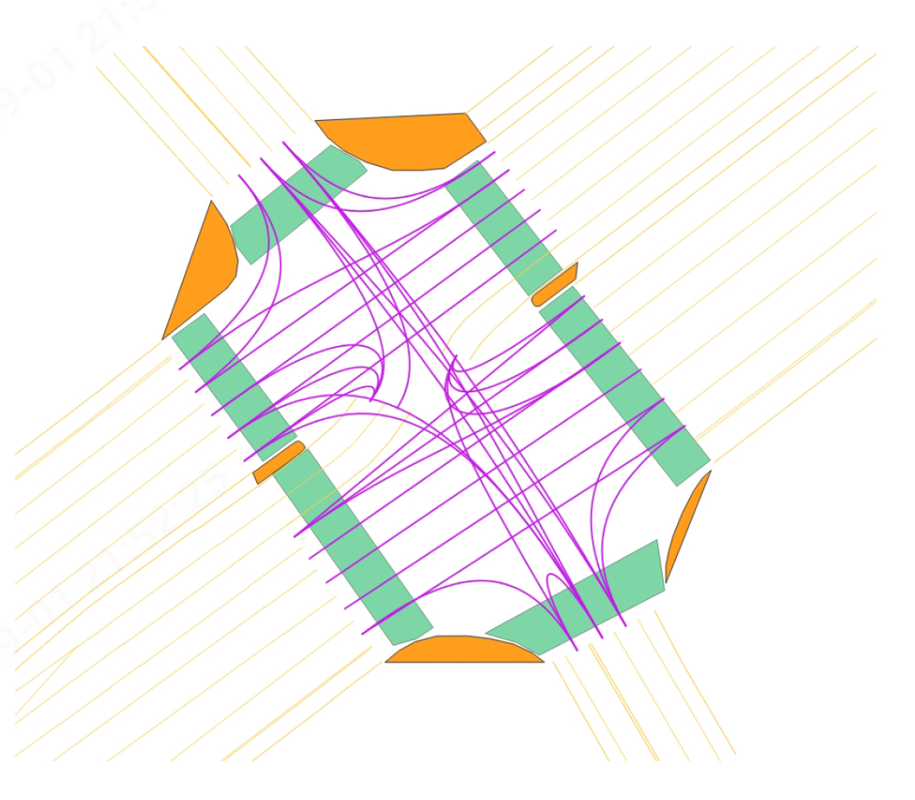
  • Developed intersection path-planning algorithms using third-order Bézier curve optimization, lane-group combinatorial optimization, and Hybrid A* to generate smooth, collision-free reference lines that respect vehicle kinematics.
  • Planned 9,625 intersection paths in Shanghai; 99% met the required standards, and the remaining 1% were correctly flagged for review.
  • Deployed the algorithms to the HD-map labeling production platform, increasing labeling efficiency by over 1,000% and replacing error-prone manual operations.
02

Education

Excellent academic performance is never the destination.

MSc in Mechanical Engineering
Department of Mechanical and Process Engineering
ETH Zurich, Zurich, Switzerland
Advised by Dr. Jan Carius and Prof. Marco Hutter
GPA: 5.7 / 6.0 | Rank: Top 10%
Courses
Graduate Courses and Grades
CourseGrade
151-0851-00 Robot Dynamics5.5 / 6.0
151-0604-00 Microrobotics5.5 / 6.0
151-0563-01 Dynamic Programming and Optimal Control5.5 / 6.0
151-0854-00 Autonomous Mobile Robots6.0 / 6.0
151-0660-00 Model Predictive Control6.0 / 6.0
151-0566-00 Recursive Estimation5.3 / 6.0
252-0579-00 3D Vision5.5 / 6.0
227-0216-00 Control Systems II5.3 / 6.0
227-0225-00 Linear System Theory6.0 / 6.0
263-5210-00 Probabilistic Artificial Intelligence5.5 / 6.0

Sep 2018 – May 2021

BEng in Mechanical Engineering (Honor Program)
School of Mechanical Engineering
Shanghai Jiao Tong University, Shanghai, China
Advised by Prof. Liang Gong
GPA: 90 / 100 | Rank: 1/441
Courses
Undergraduate Core Courses and Grades
CourseGrade
ME429 Design and Practice of Mechatronic Systems90/100
EE205 Electrical and Electronic Technology99/100
ME113 Programming: Principles and Practice Using C++93/100
ME208 Design and Manufacture90/100
ME369 Modeling Analysis and System Control85/100
ME399 Measurement Principles and Technologies97/100
ME345 Engineering Material95/100
ES004 Electronic System Design Based on Android System98/100
CS902 Thinking and Approach of Programming94/100
EM003 Engineering Fluid Mechanics91/100
BE203 Engineering Thermodynamics92/100
MA097 Mathematical Methods in Physics88/100
MA118 Mathematical Analysis91/100
EM001 Theoretical Mechanics89/100
MA119 Probability and Statistics91/100

Sep 2014 – Jul 2018

Master’s Thesis
Department of Computing
Imperial College London, London, United Kingdom
Advised by Prof. Dario Paccagnan

Oct 2020 – May 2021

ETH Robotics Summer School
Wangen an der Aare, Switzerland
Topic: Path Planning on Rescue Robots

Jun 2019 – Jul 2019

Research Assistant
Department of Mechanical Engineering
University of Michigan, Ann Arbor, USA
Advised by Prof. Jianping Fu and Prof. Zida Li

Jun 2017 – Sep 2017

03

Research

For tomorrow’s autonomous driving.

PROJECT 01

Intersection Path Planning For HD Maps

Intelligent Automotive Solution Dept., Huawei | Jun 2020 - Sep 2020 (Full Time)
Key Words: Autonomous Driving, Path Planning, HD Map, A* search, Bezier Curve

A Fully-Planned Intersection
Obstacle Avoidance
Obstacle Avoidance

According to the HD map production pipeline, production workers will label lane boundaries, crosswalks, obstacles, road connectivity, and so on. We then need to plan paths in the road network for autonomous vehicles. As for non-intersections, such paths can be generated as the geometrical centerline of lanes, while for intersections, such virtual lanes are labeled manually, which results in low efficiency, inconsistent style, and kinematic infeasibility.

To address these problems, I developed an automation tool for path planning at intersections. Given the information around an intersection, the tool will output a smooth virtual lane to connect the previous lane and the next lane, respecting kinematic constraints, obstacle avoidance, and traffic rules. More importantly, the tool can accurately forewarn users of potential risks, which makes it easier for users to locate such constraint-inconsistent virtual lanes, without checking all results.

The algorithms planned 9,625 intersection paths in Shanghai: 99% met the required standards, while the remaining 1% were correctly flagged for review. Deployment to the HD-map labeling production platform increased labeling efficiency by over 1,000%.

PROJECT 02

Path Planning For Constrained Stochastic Systems Based On Path Integral Algorithm

ETH Zurich | Jun 2019 - Sep 2019 (Full Time)
Advised by Jan Carius, Dr. Farbod Farshidian, Prof. Marco Hutter, Robotic Systems Lab
Key Words: Stochastic Constrained Optimal Control, Path Integral, MPC

Circumvent Barrier And Respect Constraints
Delayed Decision Phenomenon

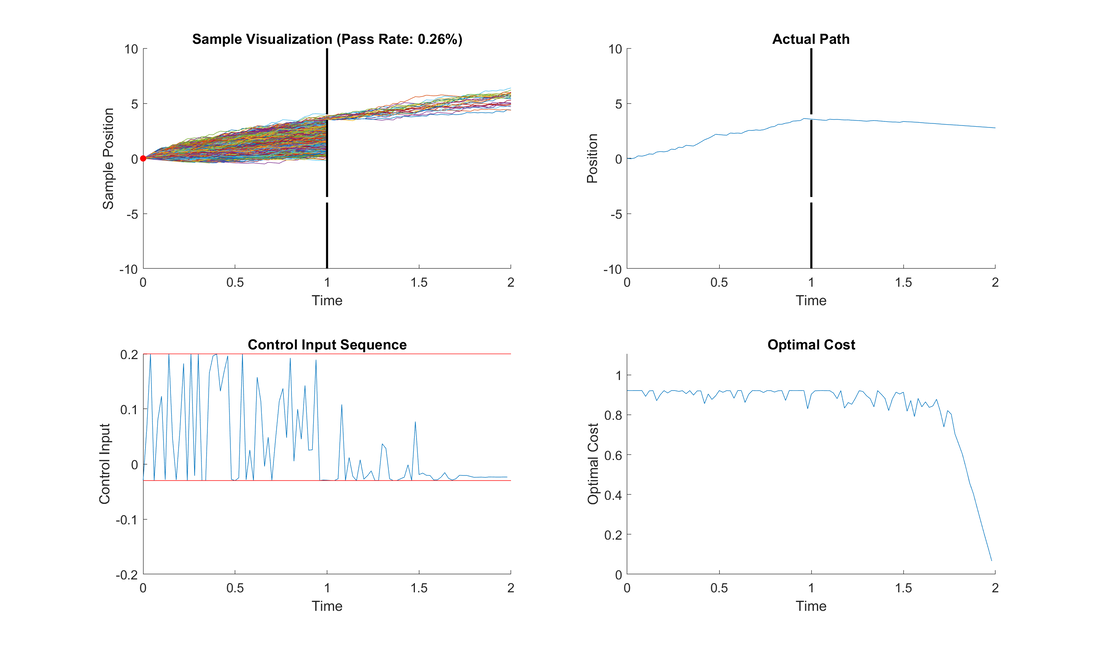
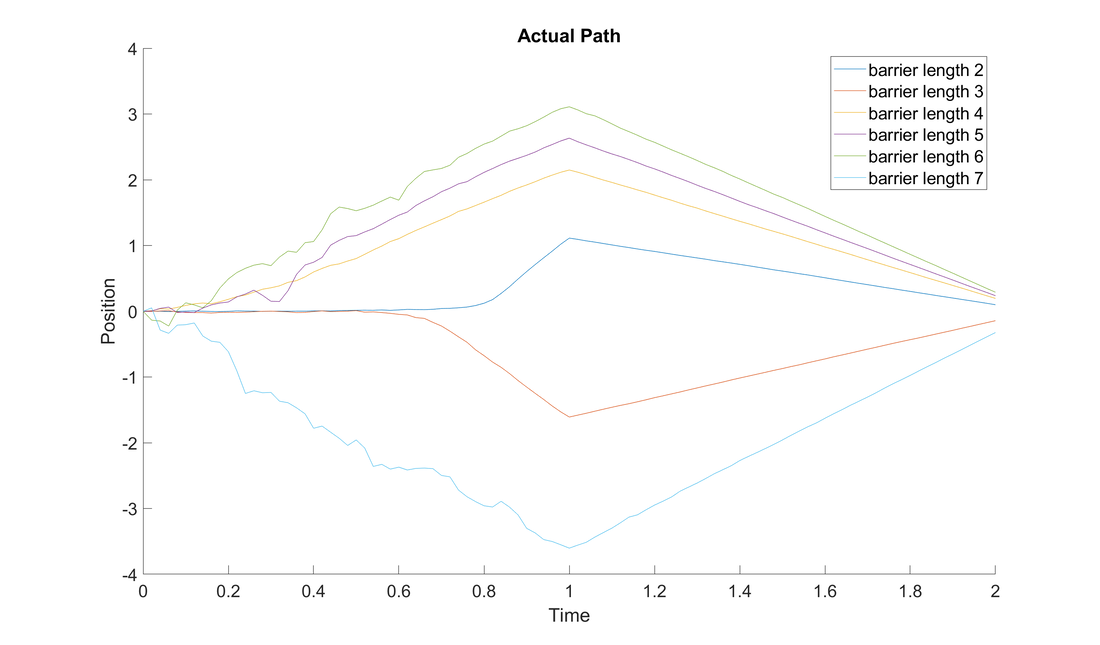
The problem of optimal control in the presence of noise occurs in many areas of science and engineering. Examples are the control of movement in biological systems, robotics, financial investment policies, and robot path planning. Dealing with real systems, we often have state-input inequality constraints. For instance, we want to keep the contact force inside the friction cone.

In stochastic sense, the cost function would thus be the expectation of nominal cost. After elegant manipulation and log transform, the optimality condition for the cost can be expressed in the linear form. Based on the path integral formulation, I investigated the possibility to find an analytic and a numerical optimizer. The sampling policy is finally modified to respect the inequality constraints. As a result, the robot can safely circumvent the barriers by applying the optimal control corrupted by the noise.

For higher dimensions, the state-input constrained feasible region may be complex and the computation cost grows fast. Further work would thus be applying parallel computation to improve the computation efficiency.

PROJECT 03

3D Reconstruction From Depth Maps With Microsoft HoloLens

ETH Zurich | Mar 2019 - Jun 2019
Advised by Dr. Silvano Galliani, and Prof. Marc Pollefeys, CVG and Microsoft
Key Words: Computer Vision, Depth Map Fusion, C++

Point Cloud
Point Cloud
Point Cloud With ReflectiviyPlay animation ↗
Point Cloud With Reflectiviy

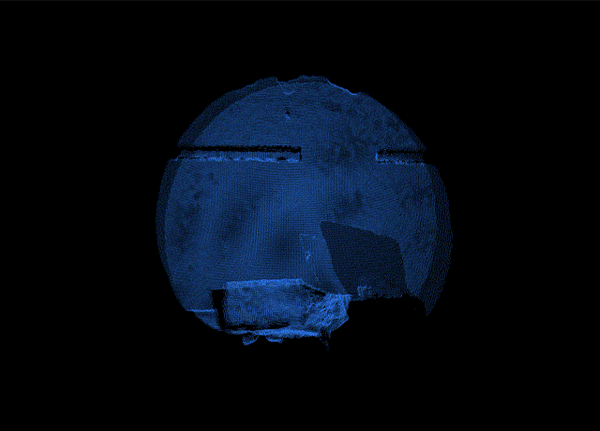
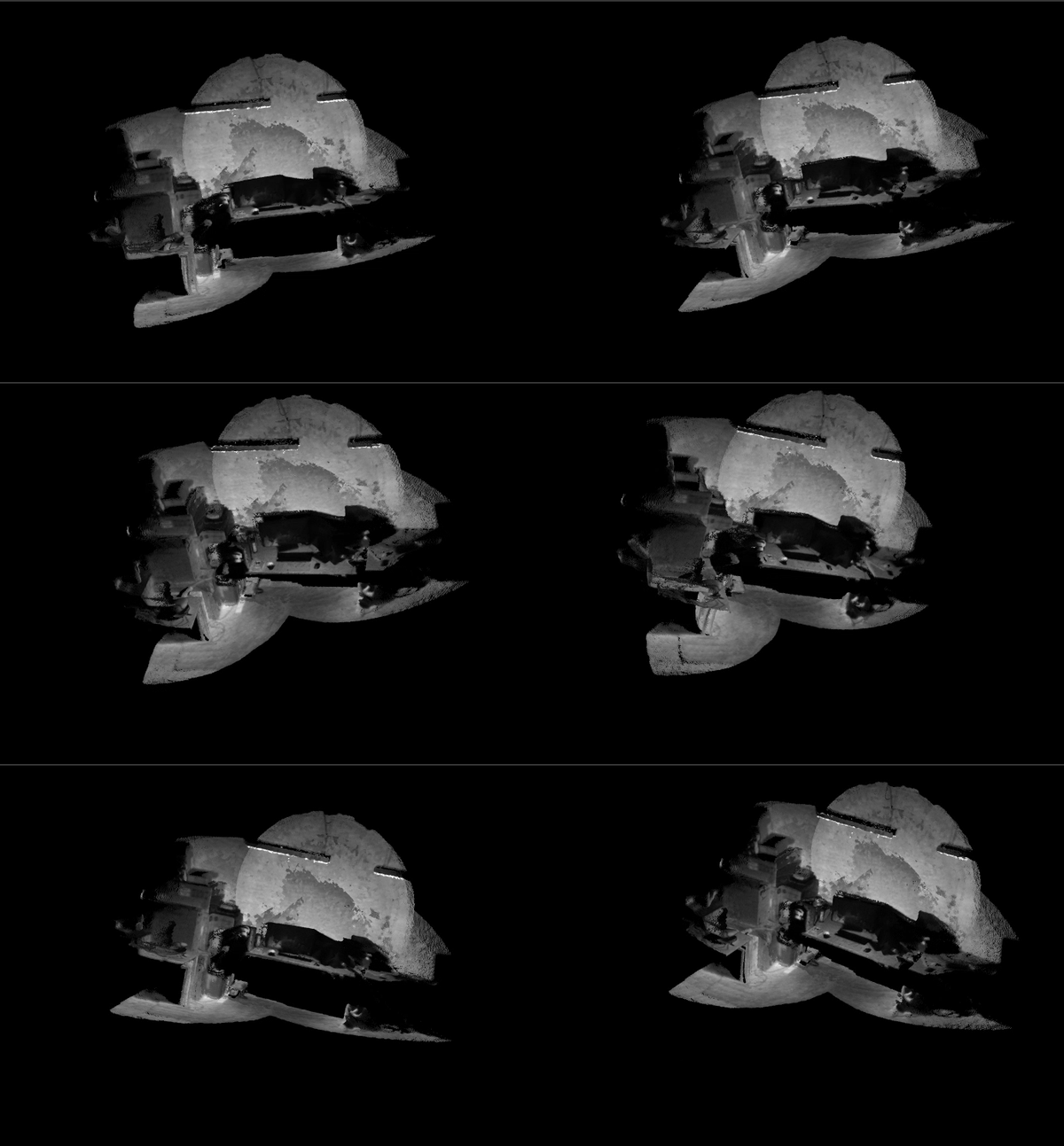
Depth map fusion is an essential part of both stereo and RGB-D based 3D reconstruction pipelines. Thanks to the research mode in HoloLens, it’s possible to get direct access to the raw data obtained from the time-of-flight (ToF) camera. The goal of this research is to implement an algorithm that fuses multiple depth maps into a single point cloud by checking for visibility, geometric and appearance consistency. The input is a stream of depth, and intensity images from ToF Camera of HoloLens, together with a sequence of corresponding camera poses. The resulting output is a single point cloud containing the same amount of 3D information but in a more compact and consistent representation.

The outcome of this fusion algorithm is a combined and consistent point cloud derived from a stream of depth and intensity images produced by HoloLens. Tests were performed on public data sets as well as real data recorded from HoloLens. With appropriate parameter setting, the result is satisfying, as shown on the left side.

PROJECT 04

3D-Reconstruction Robot With Self-Collision Avoidance

Shanghai Jiao Tong University | Oct 2017 - Jun 2018
Advised by Prof. Liang Gong, Inst. of Mechatronics, SJTU
Key Words: Robot Kinematics, Computer Vision, ROS, Mechanical Design

RViz Visualization
RViz Visualization
Real-Time Motion Mapping

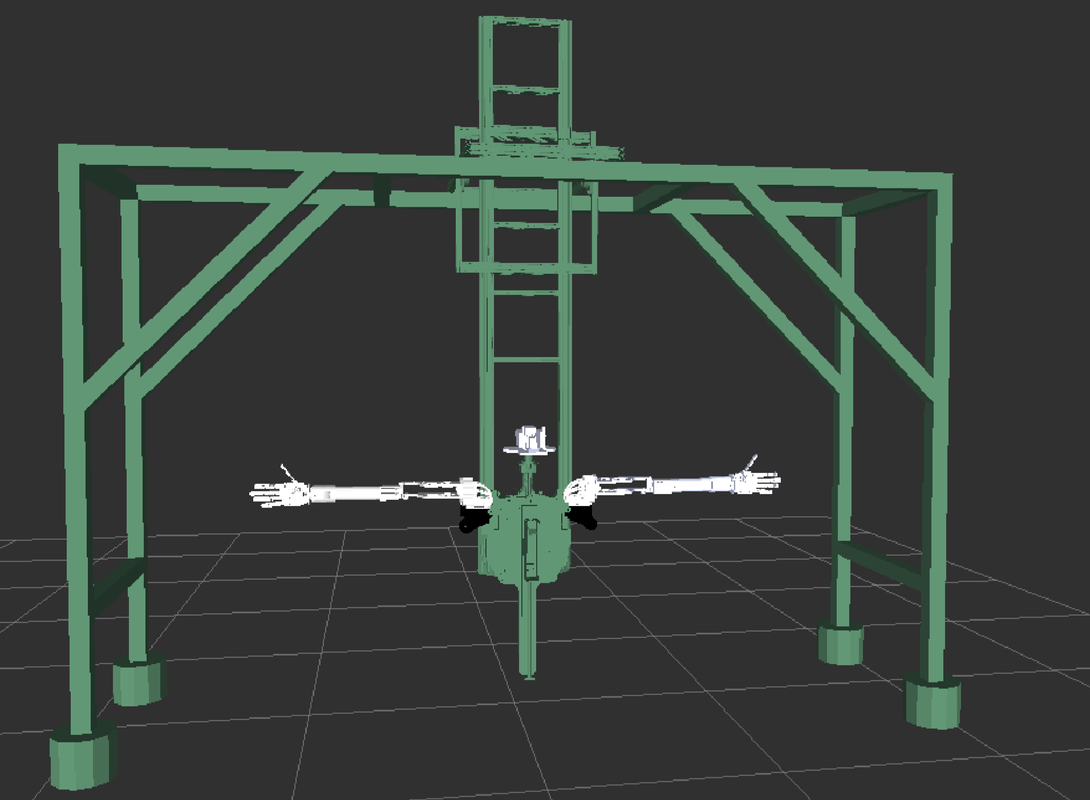
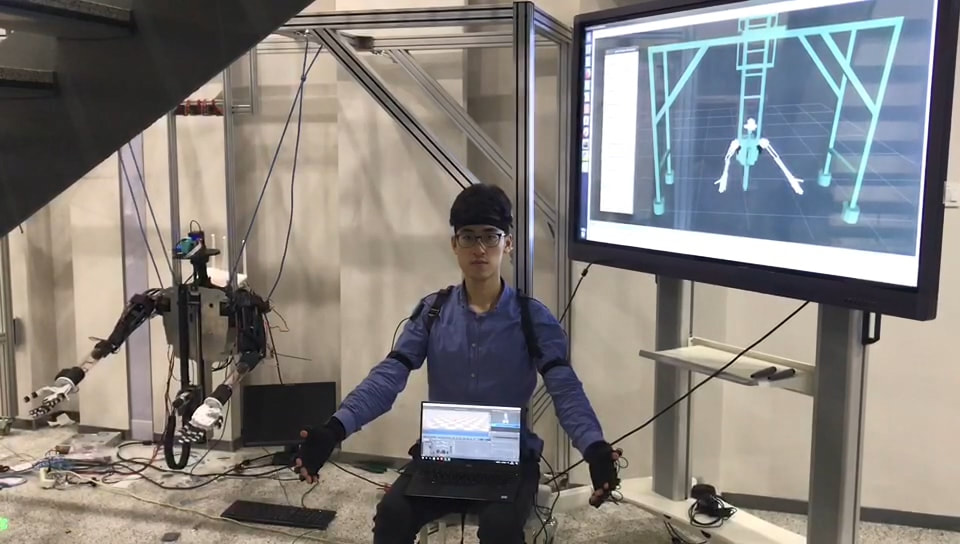
3D models of crops contain rich information such as the branch number and the branch angle. However, the measurement of a single crop in the fields is typically hard to perform due to poor working conditions and multiple inter-plant shades. Therefore, we aim to develop a robot, controlled by human-machine interaction, to create optimal measurement conditions. To remove obstacles before the object of interest, we apply wearable human motion sensors to facilitate precise remote control (so that agricultural scientists do not have to go to fields). Specifically, we collect human motion data via motion capture equipment produced by Noitom. Then, joint angles are computed accordingly by the kinematic model so that human motion is mapped to the robot motion.

To avoid damage to the robot itself caused by misoperation, I designed a self-collision avoidance algorithm to ensure safety. The algorithm will first read input human motion data and compute the desired joint angles. If implementing these joint angles cause a link to enter the safety zone of other parts, the algorithm will prevent the potential collision.

Traditional 2D pictures lose important spatial information such as spatial angles. Therefore, I implemented the 3D reconstruction algorithm based on linear structured light. A calibrated camera and laser projector are carried by the robot to fulfill the reconstruction task.

With these two features combined, one can control the robot remotely to 3D reconstruct the crops of interest for further biological study.

PROJECT 05

Magnetic Control System Design

Wuji Technology | Jun 2018 - Sep 2018 (Full Time)
Key Words: Magnetism, Control, COMSOL, Simulation

Single Coil Design
Single Coil Design
Single Coil TestPlay animation ↗
Single Coil Test
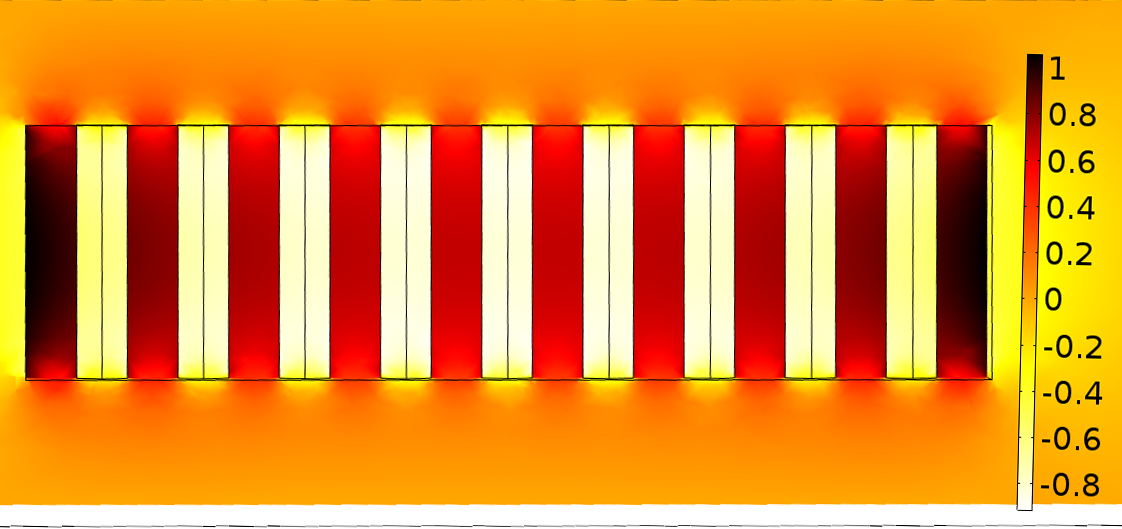
Magnetic Flux Density
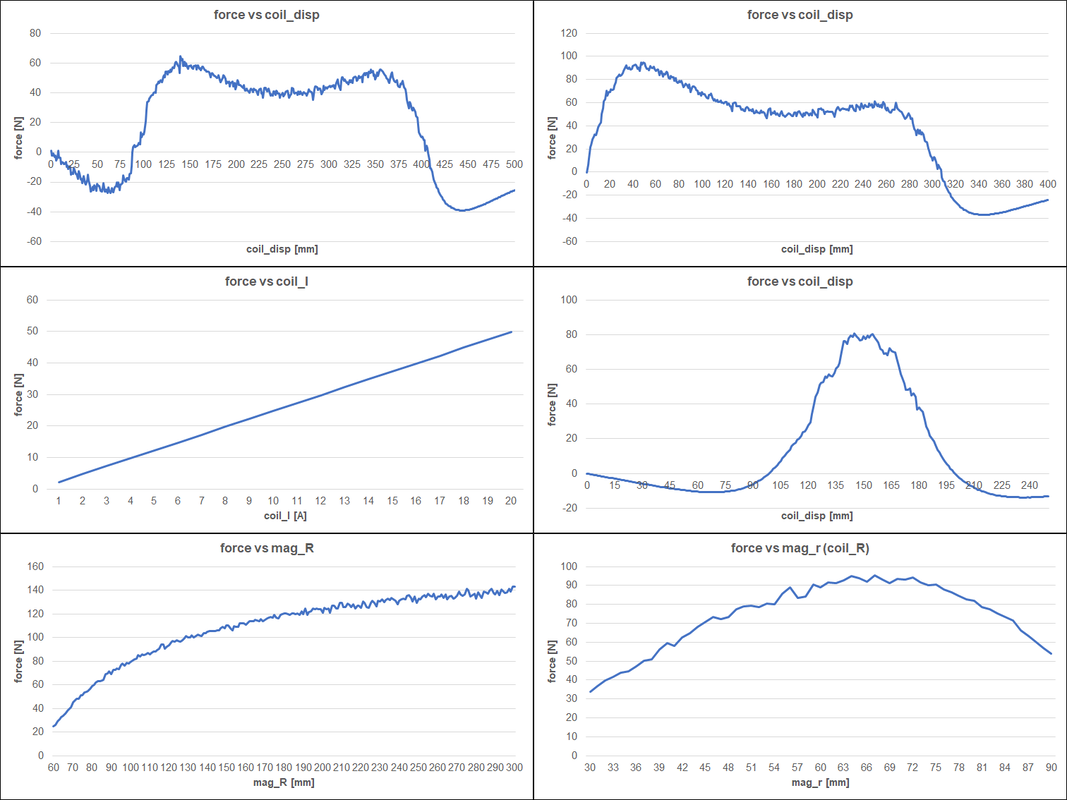
Parameter Study
Parameter Study

Linear actuators available in the market are mostly expensive with limited types. The most common ones are voice coil actuators and classical linear actuators, which are expensive and big in shape respectively. However, there are a lot of application scenarios where linear actuators outperform rotary actuators. Thus, we wanted to design a system with movable coil arrays as linear actuators. The potential applications include the military sand table, rhythm visualization and compliant interaction.

The key idea is exploiting the properties of the magnetic field induced by a solenoid. After careful calculation and simulation, we decided on magnetic material (NdFeB) and coil parameters to develop a prototype.

Result: we failed to come up with a feasible design to meet all required specifications, namely, excellent dynamic response characteristics, adequate heat-sinking capability and large maximum current carrying capacity. The three most significant barriers are the limited magnetic force, the high cost of the feedback loop and significant magnetic flux leakage. Despite the failure, I learnt a lot about field simulation and enjoyed the time when I tried to exploit every possibility.

PROJECT 06

Microscale Platform For The Measurement Of Blood Retraction Force

University of Michigan, Ann Arbor | Jun 2017 - Oct 2017 (Full Time)
Advised by Prof. Jianping Fu, Dept. of ME, U-M, Ann Arbor
Key Words: Image Analysis, Experiment Design, Mechanical Design, Data Analysis

CNT Deposition
CNT Deposition
Measurement
Measurement

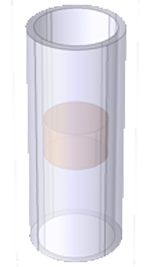
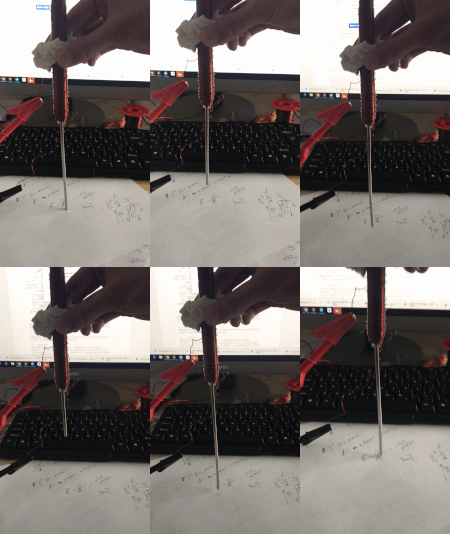
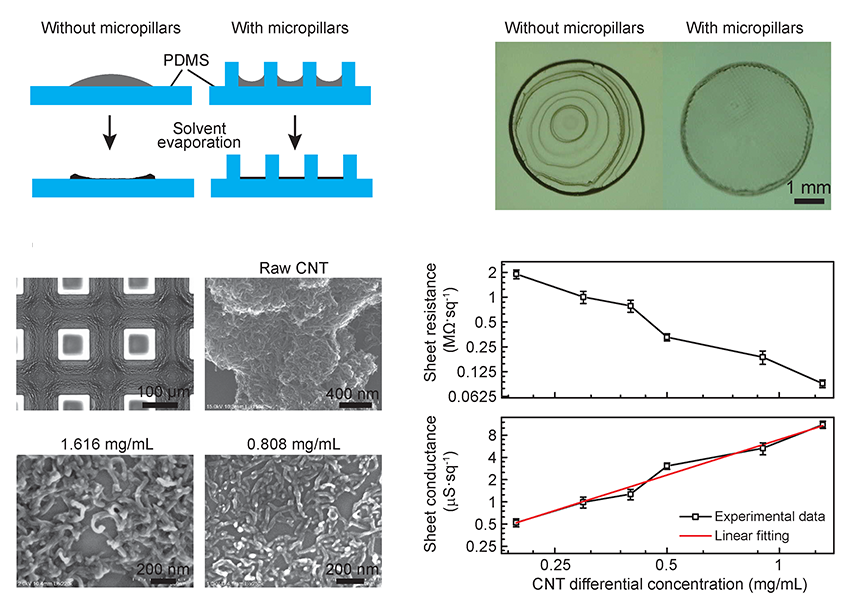
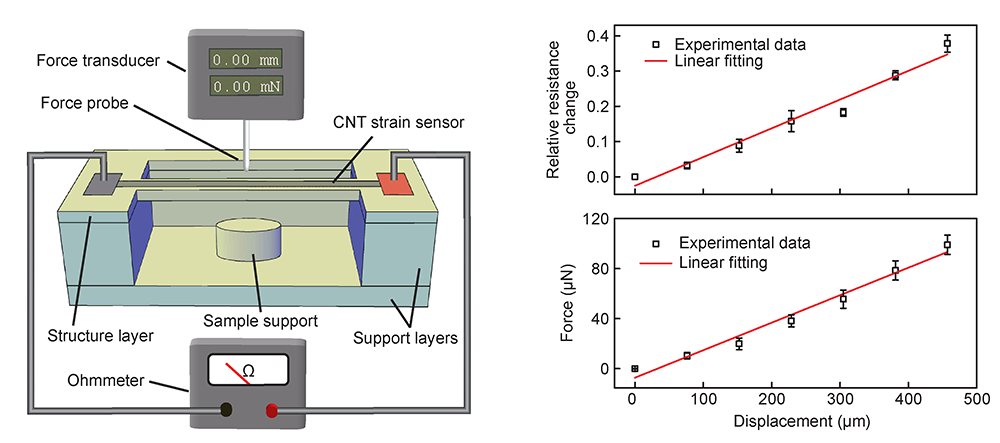
Coagulation monitoring is essential for perioperative care and thrombosis treatment. However, existing assays for coagulation monitoring have limitations such as a large footprint and complex setup. In this work, we developed a miniaturized device for point-of-care blood coagulation testing by measuring dynamic clot retraction force development during blood clotting. In this device, a blood drop was localized between a protrusion and a flexible force-sensing beam to measure clot retraction force. The beam was featured with micropillar arrays to assist the deposition of carbon nanotube films, which served as a strain sensor to achieve label-free electrical readout of clot retraction force in real time. We characterized mechanical and electrical properties of the force-sensing beam and optimized its design. We further demonstrated that this blood coagulation monitoring device could obtain results that were consistent with those using an imaging method and that the device was capable of differentiating blood samples with different coagulation profiles. Owing to its low fabrication cost, small size, and low consumption of blood samples, the blood coagulation testing device using carbon nanotube strain sensors holds great potential as a point-of-care tool for future coagulation monitoring.

PROJECT 07

Multifunctional Portable Instrument For Seed & Panicle Phenotyping

Shanghai Jiao Tong University | Sep 2015 - Jan 2018
Advised by Prof. Liang Gong, Inst. of Mechatronics, SJTU

Key Words: Image Analysis, PCB, Mechanical Design

High Level Overview
High Level Overview
Seed Analysis
Seed Analysis
Panicle Analysis
Panicle Analysis

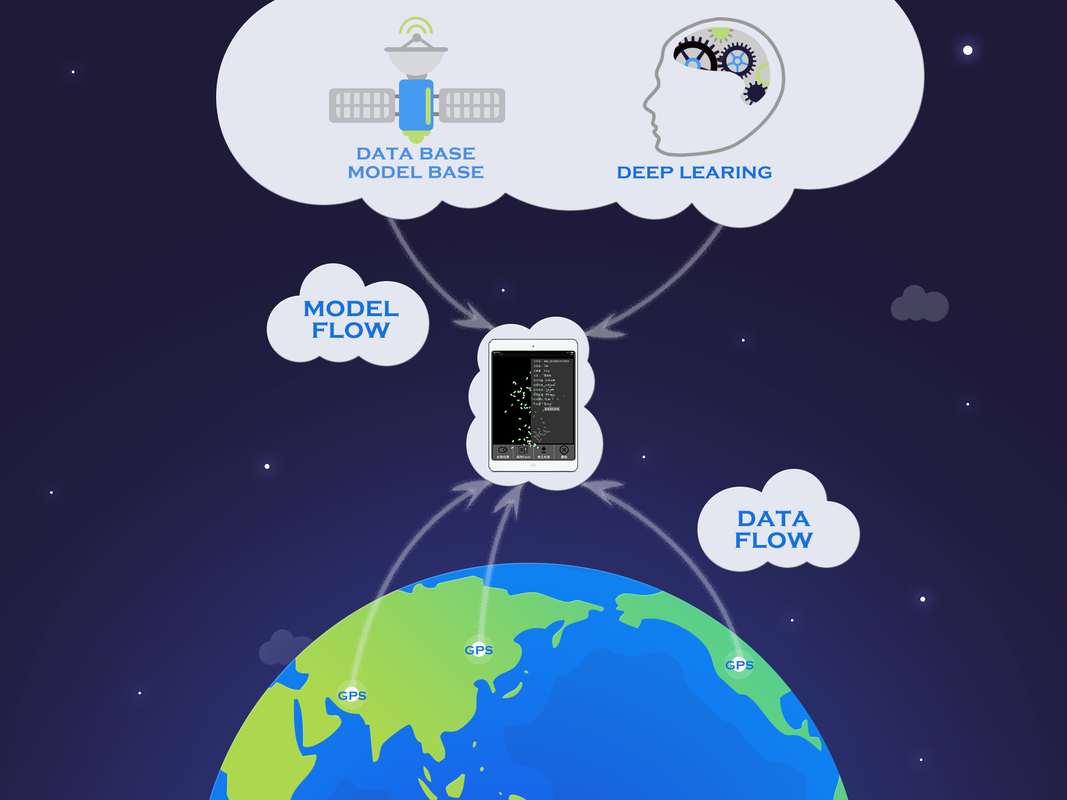
For crop breeding and variety screening, it is essential to improve the phenotyping throughput for quantitatively evaluating the seed traits. However, existing high-throughput phenotyping facilities for crop seeds generally have some limitations such as high cost, large size and high weight which hinder the usage in the field. Thus, a smartphone-based, low-cost, portable instrument to achieve the function of high-throughput field phenotyping for crop seeds is in high demand.

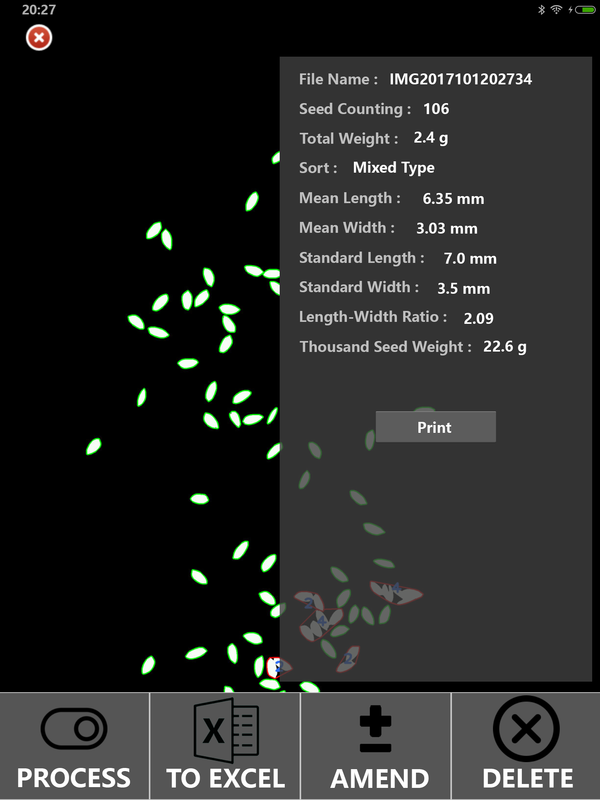
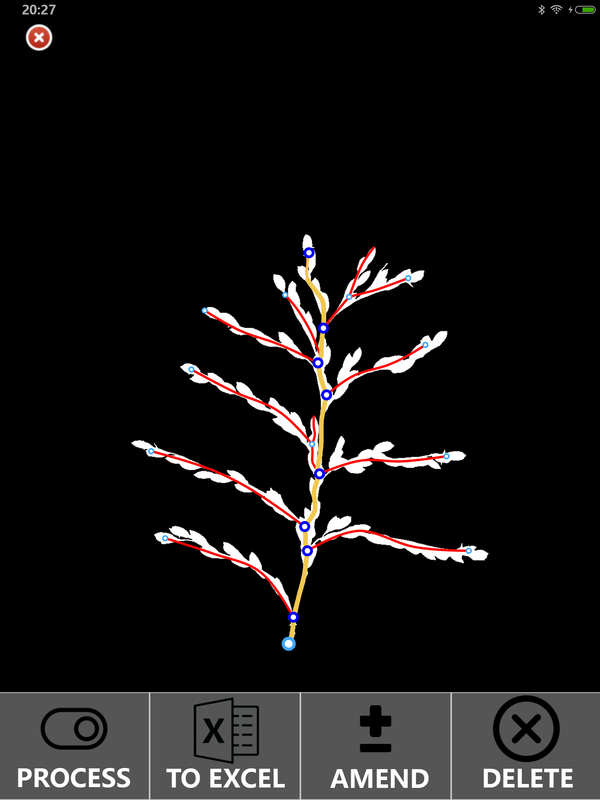
I use a smartphone as the instrument's main platform, which offers rich functionality for fast phenotyping the crop seeds. First, advanced computing ability and the high-resolution camera offer the conditions for image analysis, which measures morphological parameters by image processing. Second, the Bluetooth module makes communication convenient for device control. Third, user-friendly Human-Machine Interface (HMI) makes it easy for users to find and correct a calculation error. The experiment results showed that the measurement accuracy of phenotypic parameters is over 97%, and this instrument can be applied in the precise measurement of crop seeds phenotypic parameters. More importantly, I introduced cloud storage to my instrument and equipped it with the capability of location-based data collection. I took full advantage of the big data collected via this instrument to provide valuable information for agricultural breeding as well as crop selection. So far, this instrument has been deployed in 24 agricultural technology promotion service centers, and the number continues increasing.

PROJECT 08

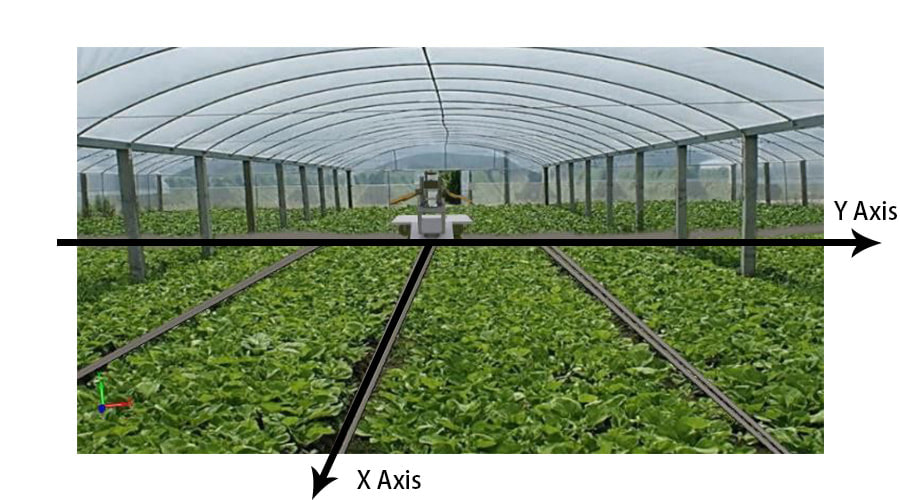
Unmanned Ground Vehicle

Shanghai Jiao Tong University | Sep 2014 - Jul 2015
Advised by Prof. Liang Gong, Inst. of Mechatronics, SJTU
Key Words: Mechanical Design, PCB, Control, Arduino Microcontroller

Unmanned Ground Vehicle
Motion Decomposition

For cutting-edge protected agriculture, it is a leading trend to build an unmanned plant factory that requires robotic machinery as basic autonomous production units. However, the scheduling and cooperation among agricultural machines are rarely investigated. This research focuses on a modular logistics system based on the motion decomposition, and the objective is to develop a fully interrelating intelligent agricultural production system.

Firstly, an unmanned ground vehicle is developed for transferring intelligent agricultural machines such as agricultural robots. In consideration of the complex terrain features, both automatic mode and manual mode are available. The multifunctional smart remote-control mode is designed for users to control the logistic systems accurately and the application of tablet PC provides a good user experience. Secondly, a control and mechanical system is designed to dock and transfer a harvesting robot. The safety and reliability of this system are jointly ensured by its movement pattern, the design of guide rails on the slope and the precise positioning. Third, the automatic charging function is realized by an automatic docking system with a maximum tolerance of 8 cm, which enables the system to work 7/24.

04

Publications

Writing is thinking.

Publications

  1. Wang, Y., & Paccagnan, D. (2022). Data-Driven Robust Congestion Pricing. 2022 IEEE 61st Conference on Decision and Control (CDC), 4437–4443.
  2. Huang, L., Liu, X., Ou, Y., Huang, H., Zhang, X., Wang, Y., Liang, Y., Yu, X., Zheng, W., Zhang, H., & Li, Z. (2020). Microengineered Flexural Post Rings for Effective Blood Sample Fencing and High-Throughput Measurement of Clot Retraction Force. ACS Sensors, 5(12), 3949–3955.
  3. Wang, Y., Kong, L., Yang, H., Li, J., Xia, P., Gong, L., & Liu, C. (2019). Building Unmanned Plant Factory with Modular Robotic Manipulation and Logistics Systems. Recent Developments in Intelligent Computing, Communication and Devices, 11-19.
  4. Shen, G., Chen, M., Wang, Y., Su S. & Fei, Y. (2019). A Self-morphing Algorithm of Modular Robot. Journal of Machine Design, 36(01), 5-9
  5. Li, Z., Wang, Y., Xue, X., McCracken, B., Ward, K., & Fu, J. (2018). Carbon Nanotube Strain Sensor Based Hemoretractometer for Blood Coagulation Testing. ACS Sensors, 3(3), 670-676.
  6. Li, Z., Xue, X., Lin, F., Wang, Y., Ward, K., & Fu, J. (2017). Capillary Assisted Deposition of Carbon Nanotube Film for Strain Sensing. Applied Physics Letters, 111(17), 173105.
  7. Mao, Y., Wang, Y., Gong, L., Wang, Y., Ma, Z., Zhou, B., Liu, C., & Zhang, D. (2016). A Multistage Winnowing Fulfilled and Unfulfilled Grains Device and Method Based on Human-Computer Interaction. Mechatronics, 22(3), 3–6, 28.

Patents

  1. Wang, Y., Yang, H., Wang, W., Dai, S., Gong, L., Liu, C., Zhou, B., Ma Z., Mao Y. & Zhang D., “An Intelligent Platform for Agricultural Robots Based on Motion Decomposition”, Patent Number: ZL 2016 2 0928634.8
  2. Wang, Y., Yang, H., Wang, W., Dai, S., Gong, L., Liu, C., Zhou, B., Ma Z. & Zhang, D., “A Multifunctional Instrument for Seed and Panicle Phenotyping Based on Android System”, Patent Number: ZL 2016 2 0259293.X
  3. Gong, L., Wang, Y., Mao, Y., Ma, Z, Zhou, B., Wang, Y., Liu C. & Zhang, D., "A Multistage Winnowing Fulfilled and Unfulfilled Grains Device and Method Based on Human-Computer Interaction ", Patent ID: 201610589454.6
  4. Gong. L., Ma, Z., Mao, Y., Zhou, B., Wang, Y., Yang, H., Wu, L, Zhang, D. & Liu, C., "A Panicle Phenotyping Analysis Instrument and Method Based on Android Tablet", Patent ID: 201610794431.9
05

Honors

Selected Honors & Awards

  • DJI Automotive Best Individual Award (Top 1/400, 40g Gold Coin)2023
  • DJI Automotive Best Agile Development Team (Top 10%)2023
  • DJI Automotive Outstanding Individual Award in the Planning Department (Top 6%)2022
  • ETH Scholarships for International Students (6,000 USD)2020
  • China National Study Abroad Scholarship (50,000 USD)2018
  • Tang Lixin Study Abroad Scholarship (7,000 USD)2018
  • Outstanding Graduate of Shanghai (Top 5%)2018
  • Outstanding Graduate of School of Mechanical Engineering (Top 10%)2018
  • Tang Lixin Scholarship (Top 1 out of 441, 5,000 USD)2017
  • Person of the Year in SJTU (SCI-TECH Innovation) (Top 3)2017
  • Second Place in CHENJIAGENG Cup Invention Competition (Top 3 out of 395)2017
  • Second Place in Hsue-Shen Tsien Cup Innovation Competition (Top 10%)2017
  • Best of Innovation Award in Annual Project Exhibition (Top 5%)2017
  • Silver Award in SJTU ECO-TECH Innovation & Entrepreneurship Competition2017
  • Outstanding Individual of Student Association (Top 10%)2017
  • China National Scholarship (Top 3 out of 468, 1,150 USD)2016
  • Excellent Volunteer of China (4 Times)2016
  • Eleme Scholarship (Top 3 out of 48)2015
  • Merit Student in SJTU (Top 10%)2015
06

Beyond Research

Don’t worry, be happy!

Life

Favorite Books

Favorite Series

Favorite Movies

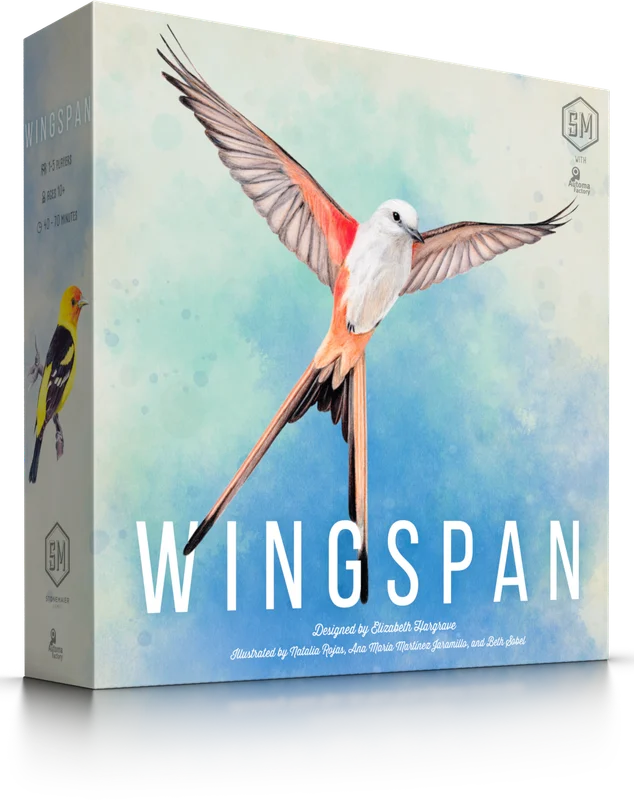
Favorite Board Games

Favorite Games

Pictures are for non-commercial purposes. All cited pictured from the Internet are linked to the original websites.

Open original ↗